


Ward Recycling
Ward Demolition is an industry leader in recycling. How? We got a head start nearly 40 years ago. Ward Demolition was established in 1987 with a Salvage yard in Sylvia park followed by a second on the north shore. By the time the below photos were taken in 1992, the yards were bursting with recycled materials for sale. There wasn’t a Mitre 10 or Bunnings in every town, so these ran quite successfully through the 90’s and early 2000’s, selling bricks, windows, sinks, kitchens, toilets, basically anything the Ward team managed to pull out of the demolition sites of the time.
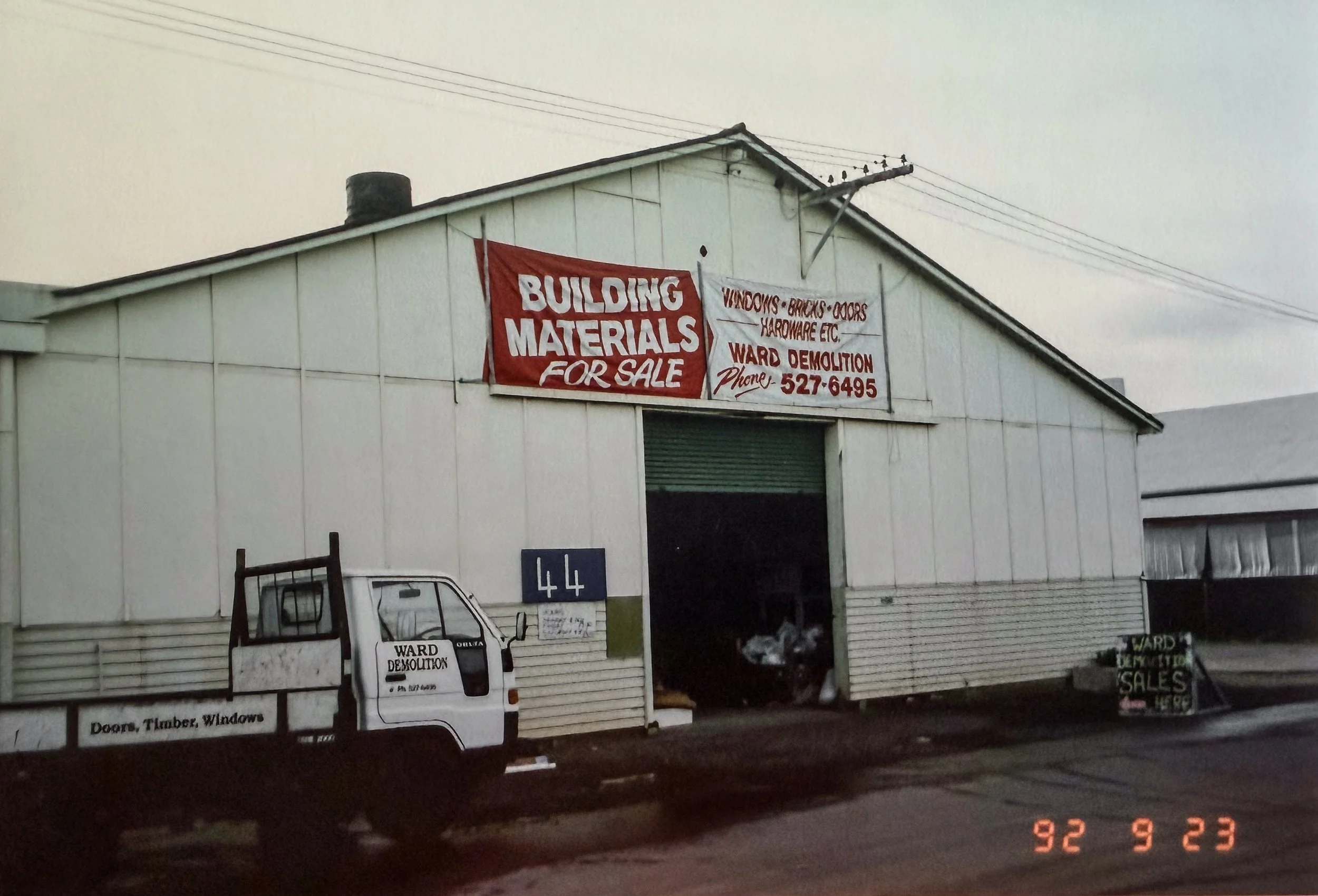
One of Ward Demolitions Original Salvage Yards in Shed 44 Sylvia Park pictured in 1992 ( Now located in Onehunga, see Ward Salvage)
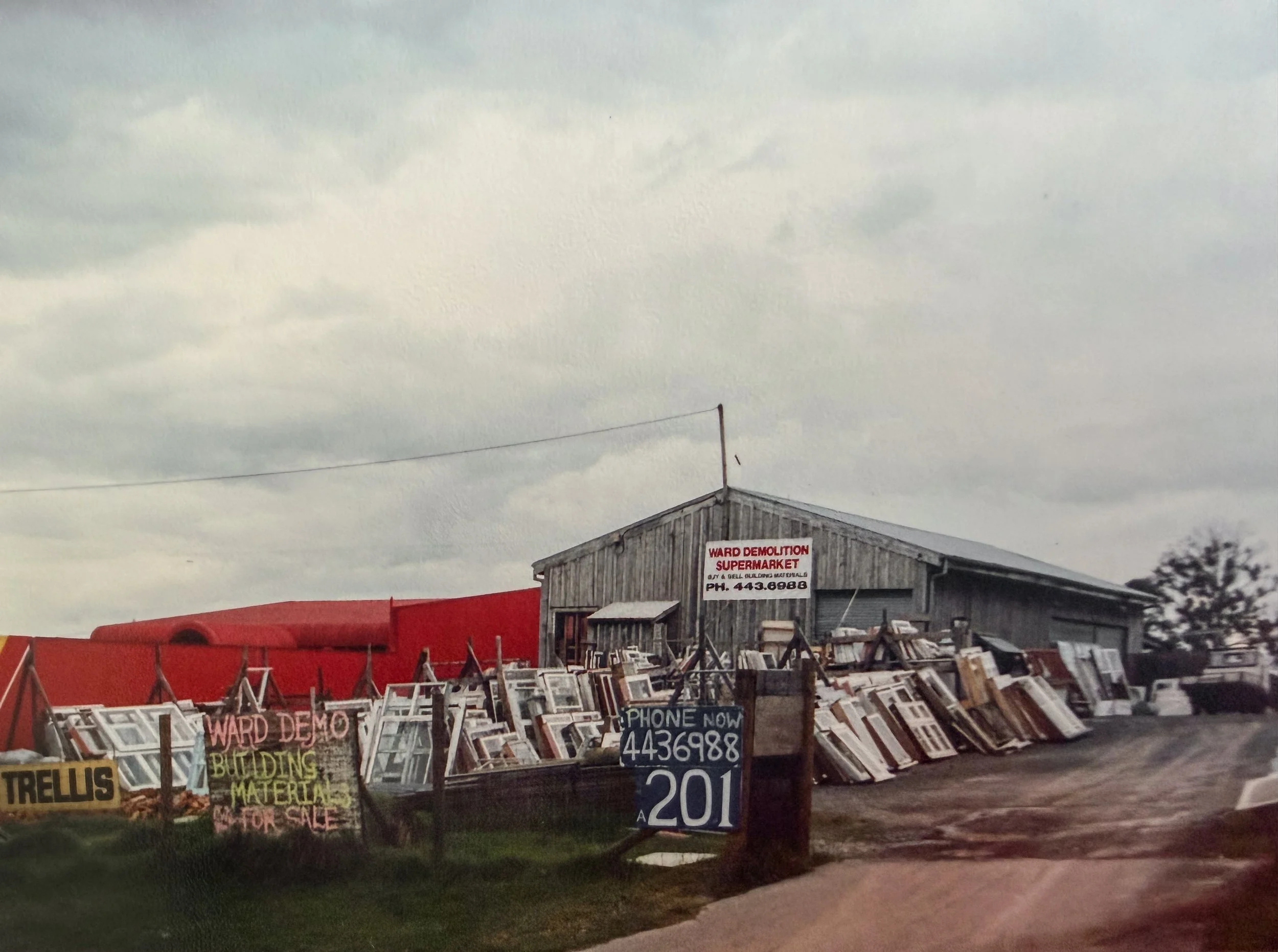
The second location of Ward Demolitions original Salvage yards was 201 Archers Rd North Shore called “Ward Demolition Supermarket”
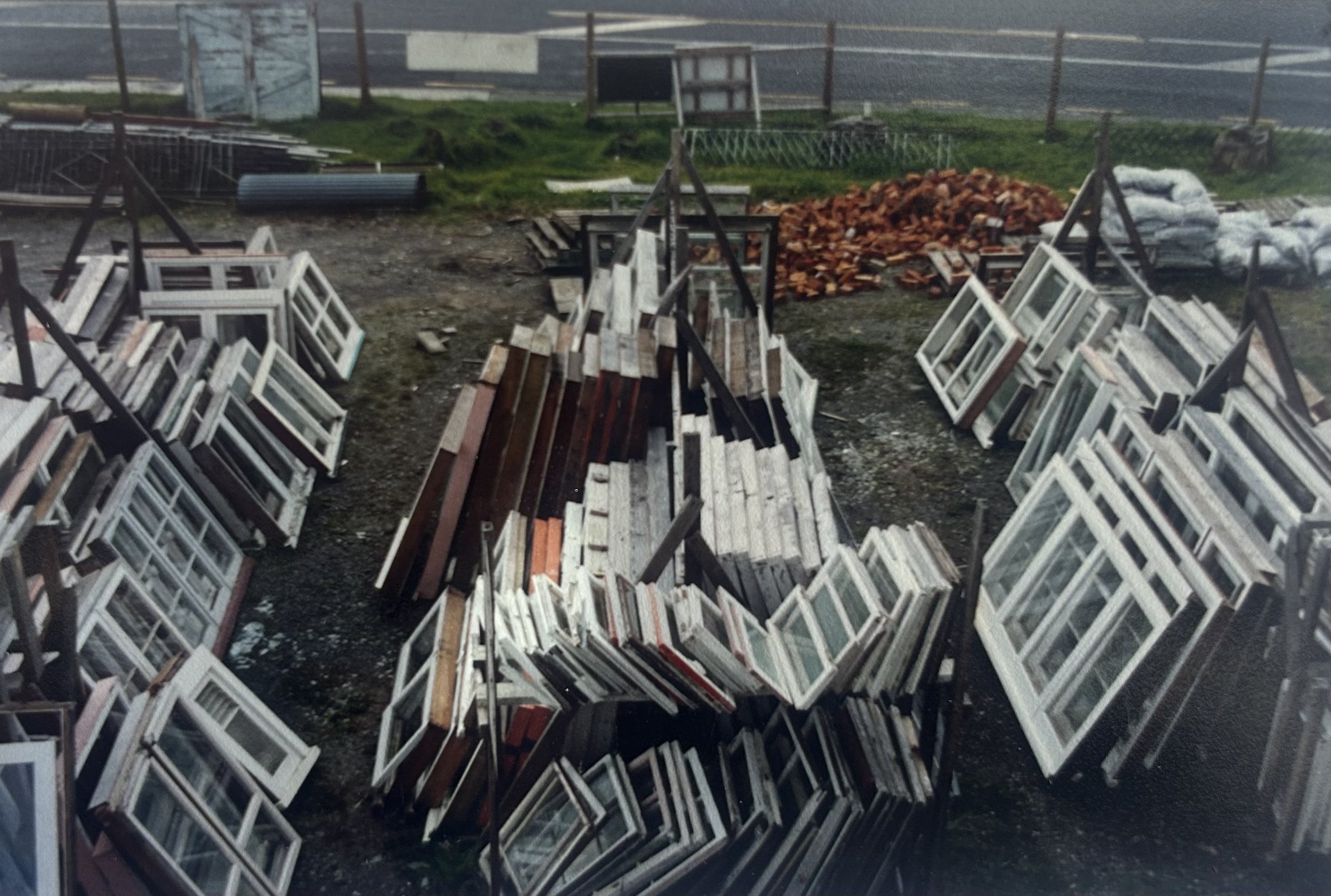
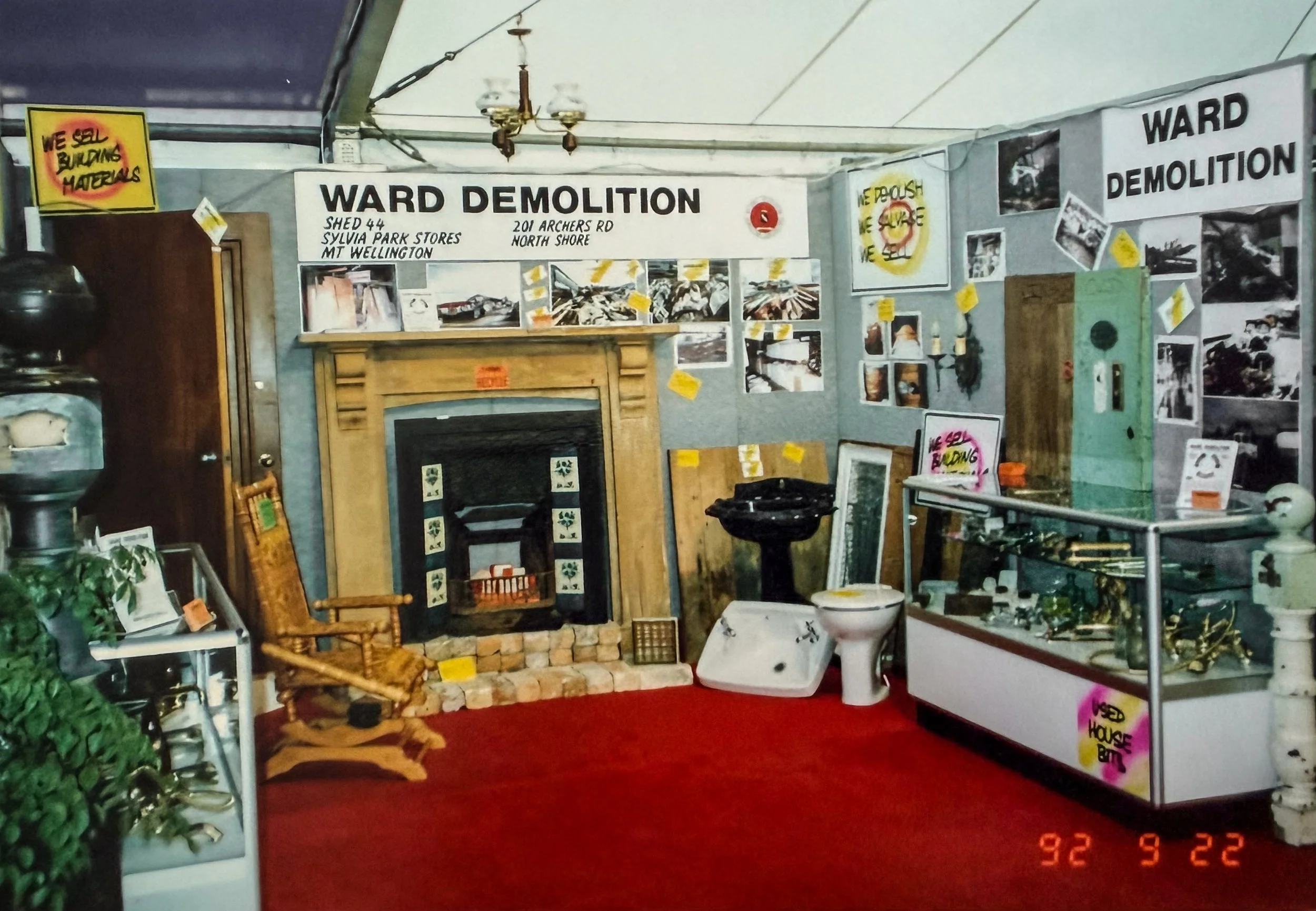
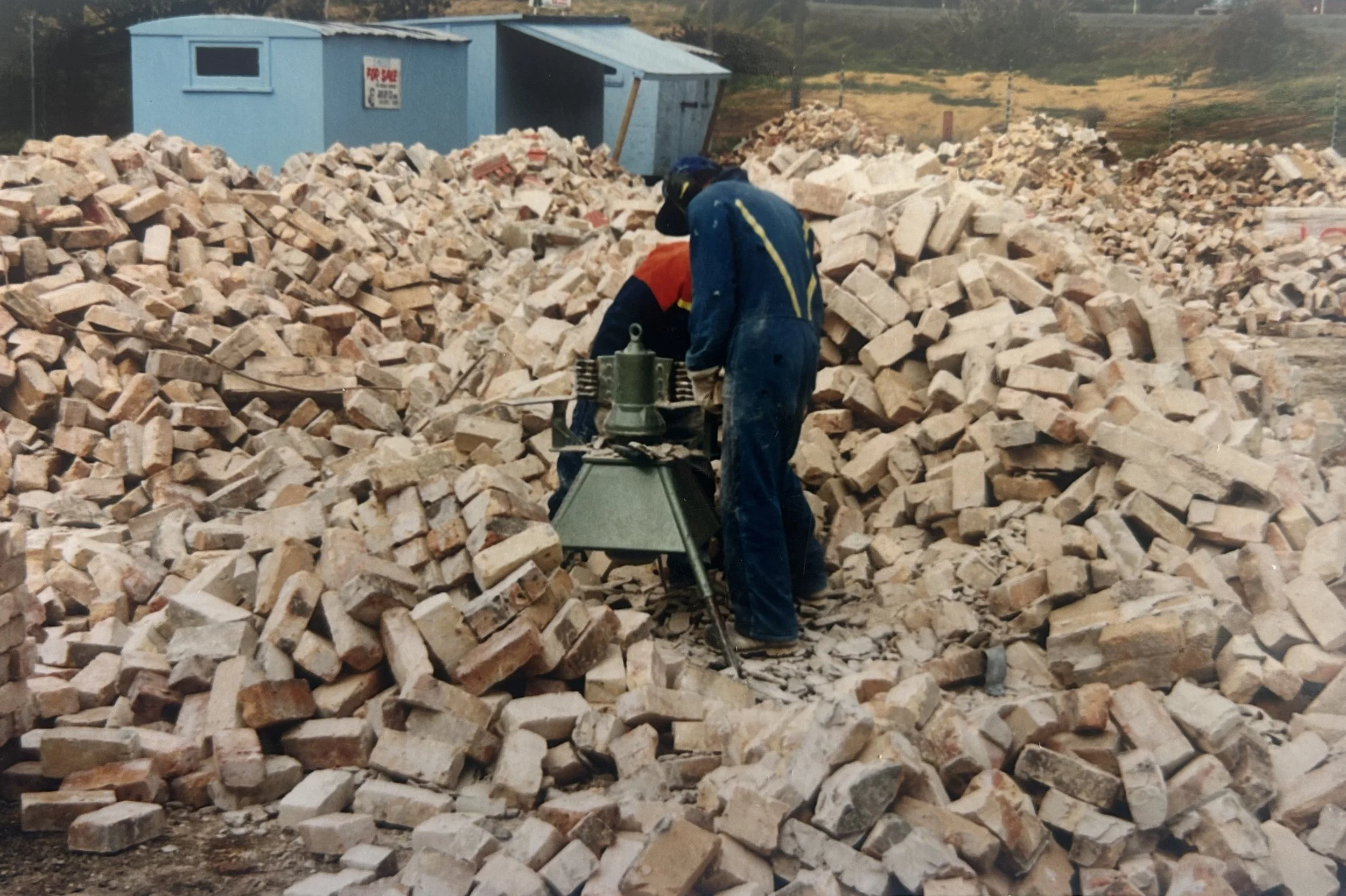
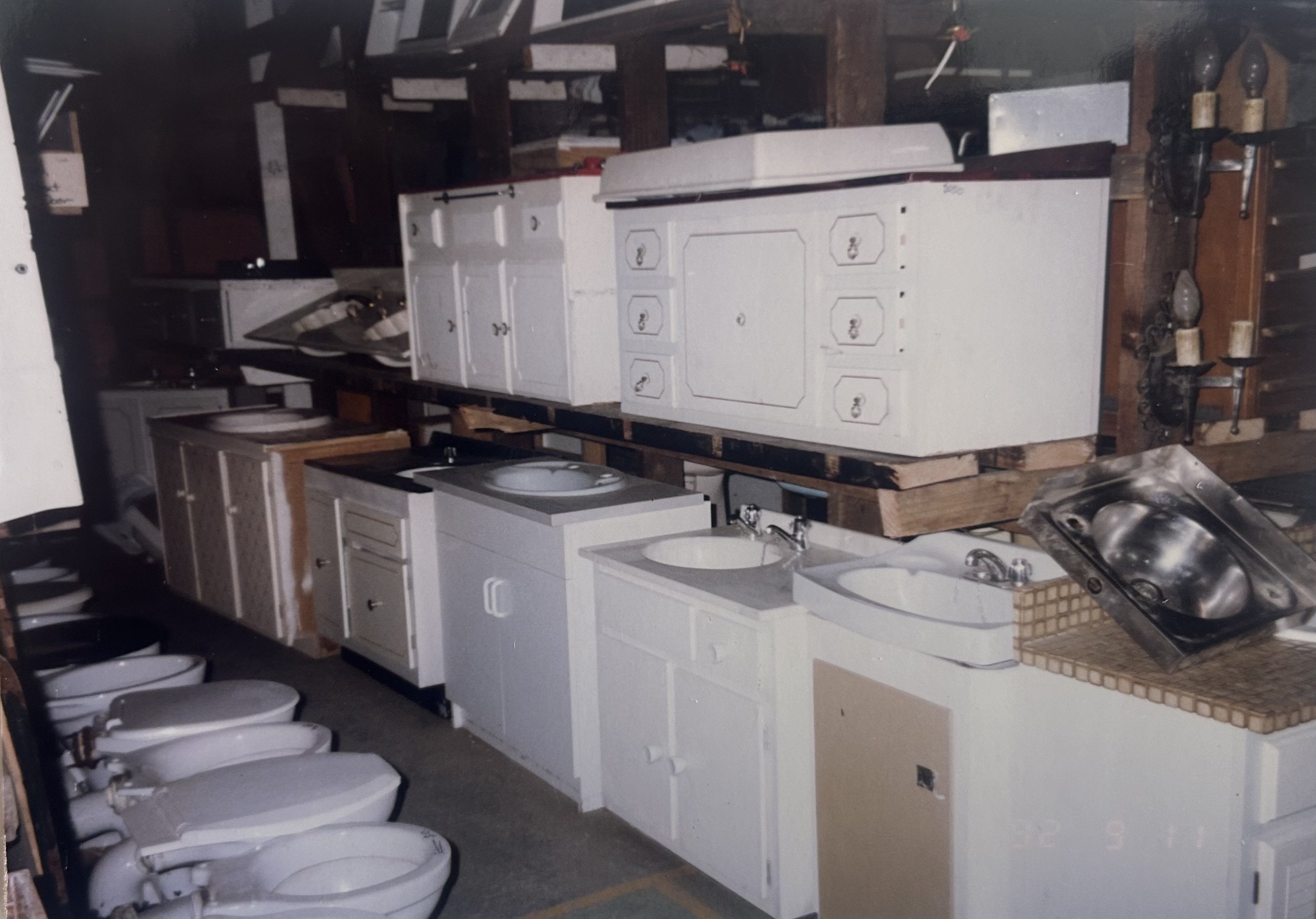
Now days the cost of transport, labour and the depleted demand for used materials resulted in our Salvage yard running at a loss. We keep it going on a smaller scale because we have a deep passion for recycling. We do our best to sell items directly from site and store larger items such as roofing, native timber and bricks at our Meremere yard for online sales. Depending on the site, we look for opportunities to donate furniture or building materials to non-profits or locals in need. Fortunately all other aspects of our recycling processes (concrete, metal and rubbish recycling) has only improved since the 80's/90's, meaning we can divert on average over 90% of a building from landfill.
Our recycling yard is constantly evolving and improving as we find new innovations that allow us to further increase our recycling efforts. We are reaching record numbers in our concrete recycling yard. With nearly 40 years of concrete recycling from demolition waste into AP45 and AP65 aggregate, we have refined our process so much so that we have been able to recycle 61721.95 tonnes of concrete in the year 2025. (With data to back this up). As pioneers of concrete recycling in NZ we were the first Demolition company to become green star accredited.
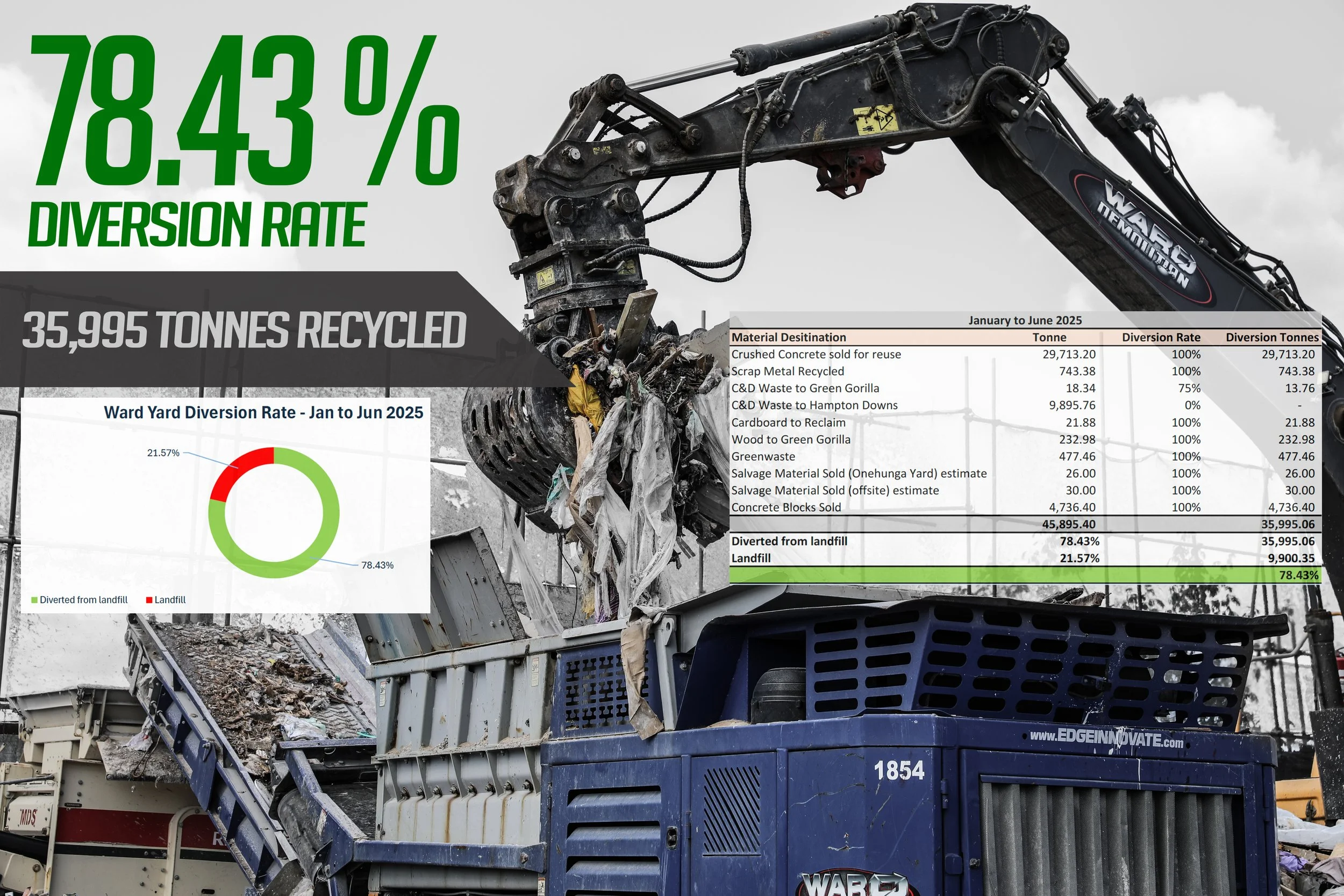
In 6 months Wards Onehunga Yard recycled 35,995 tonnes of materials.
Back in 1987 we would have been lucky to have recycled 250 tonne in our first 6 months, operating with a ute and trailer. 39 Years later and just look at what we can achieve.
Somehow this is still just the beginning. We constantly chase our goal of 0% waste.
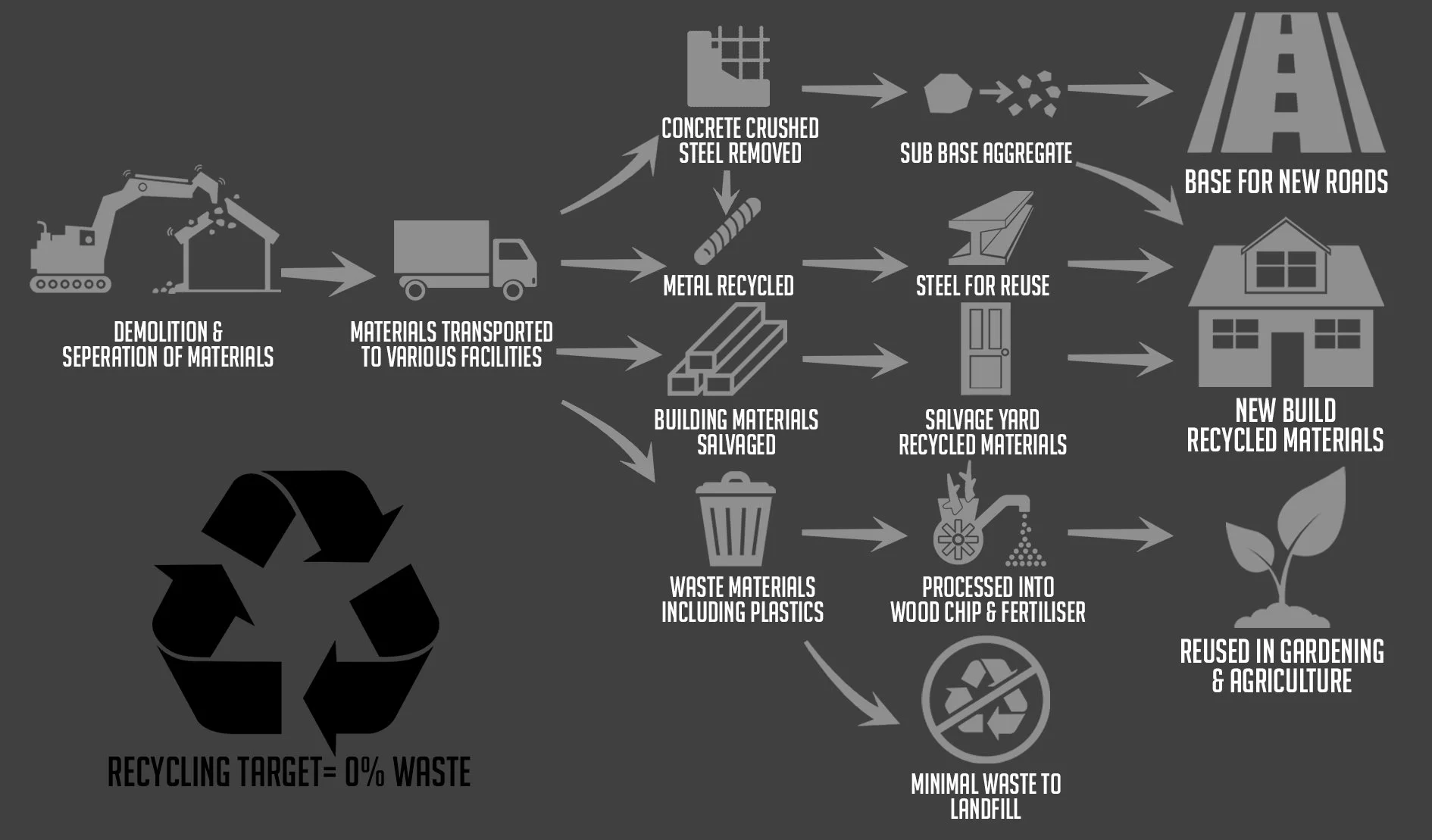
Our recycling processes and techniques have been refined over many years so much so that even given tight deadlines we can achieve impressive numbers during the demolition process. The below diagram gives a basic overview of how we seperate and recycle the various materials:
Concrete Recycling
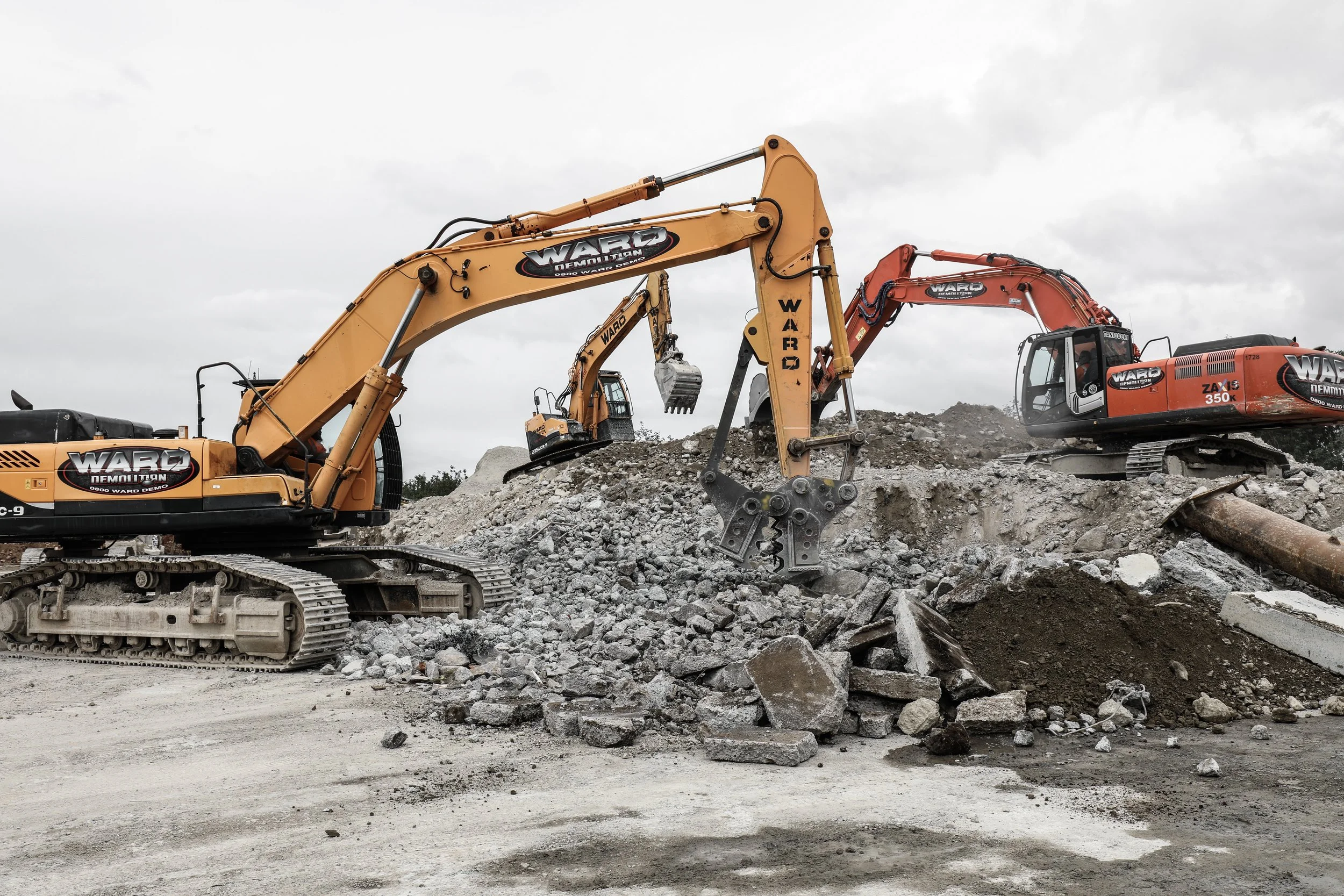
It is standard practice for us to recycle 100% of a sites concrete, the only exception being concrete that has asbestos contamination and therefore not viable for reuse. With larger jobs we often crush the concrete onsite and backfill the foundations with the material, directly recycling it and reducing carbon emissions from trucking. For smaller quantities it is brought back to our yard in Onehunga and processed with concrete received from a huge variety of demolition and Construction sites across Auckland. Ward Demolition owns the largest mobile crusher in NZ allowing us to process extensive amounts of concrete. See Concrete Recycling for more information.
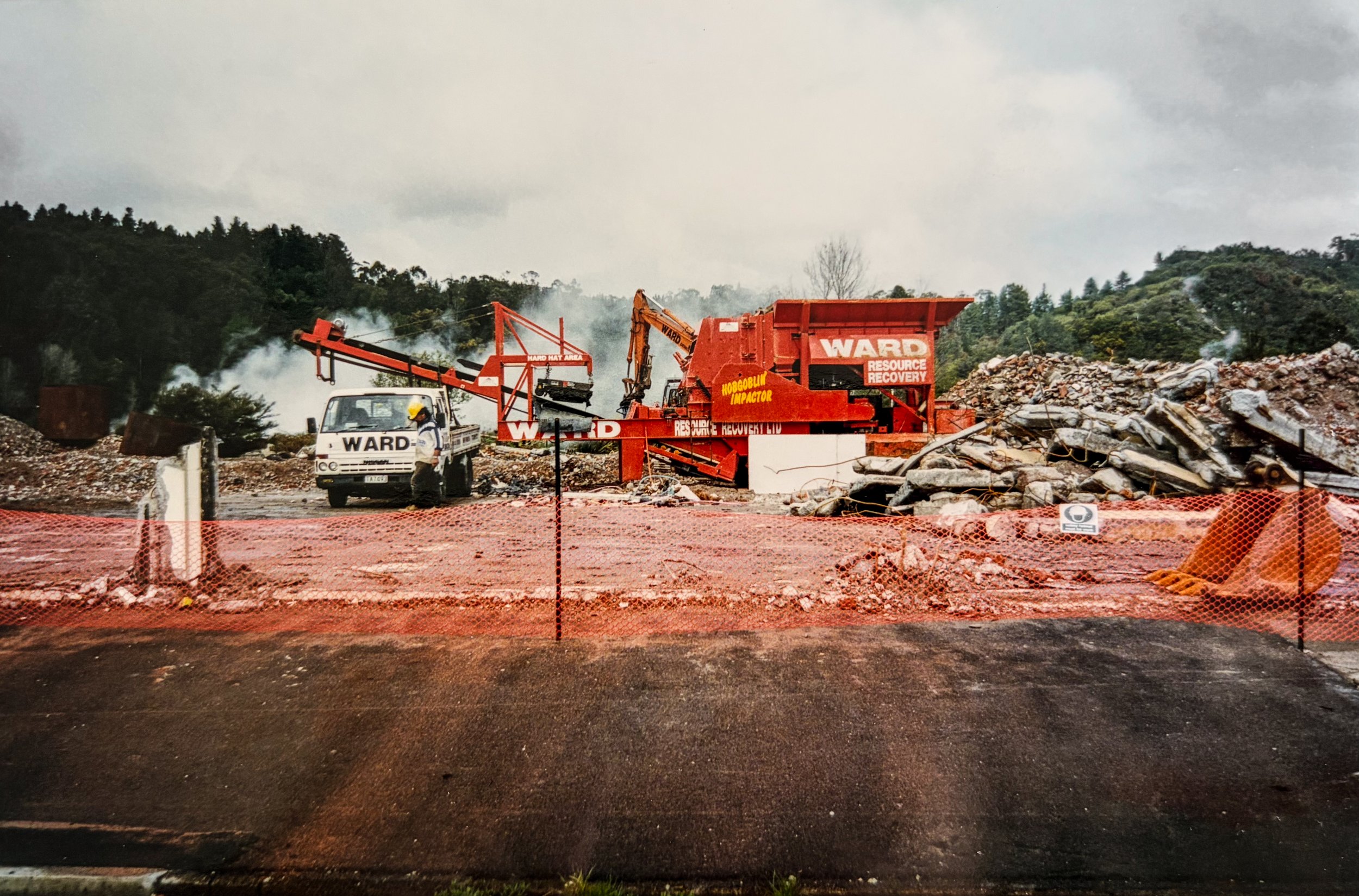
Concrete Recycling in 1992
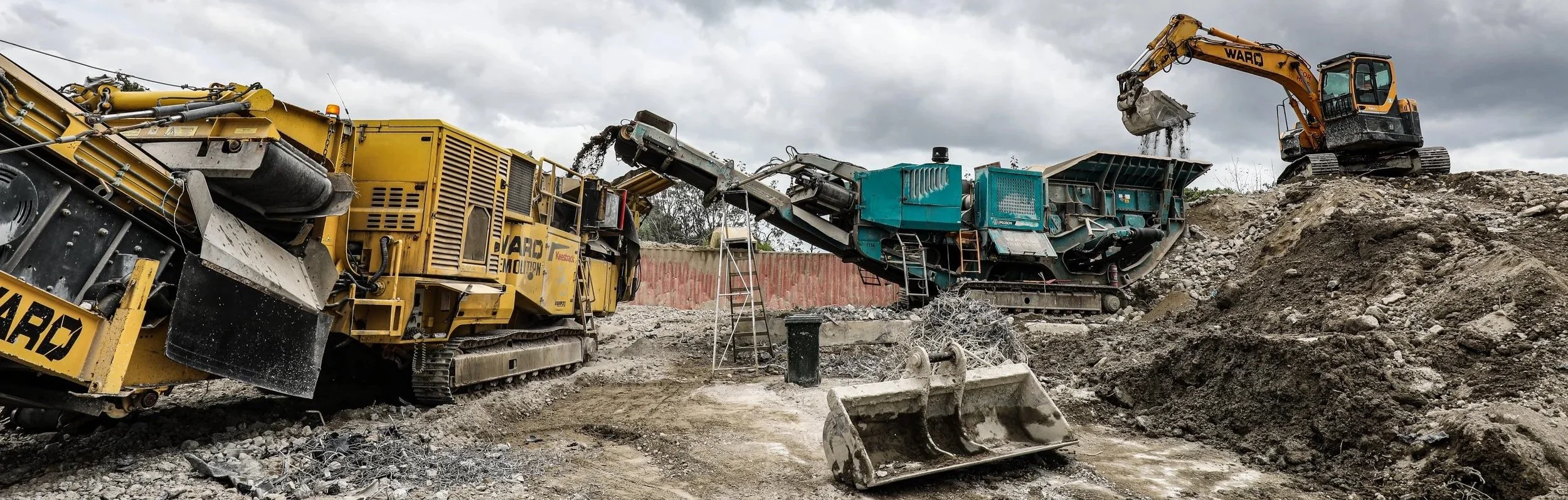
Concrete recycling in 2022
We recycled around 180,000 tonnes of concrete last fiscal year.
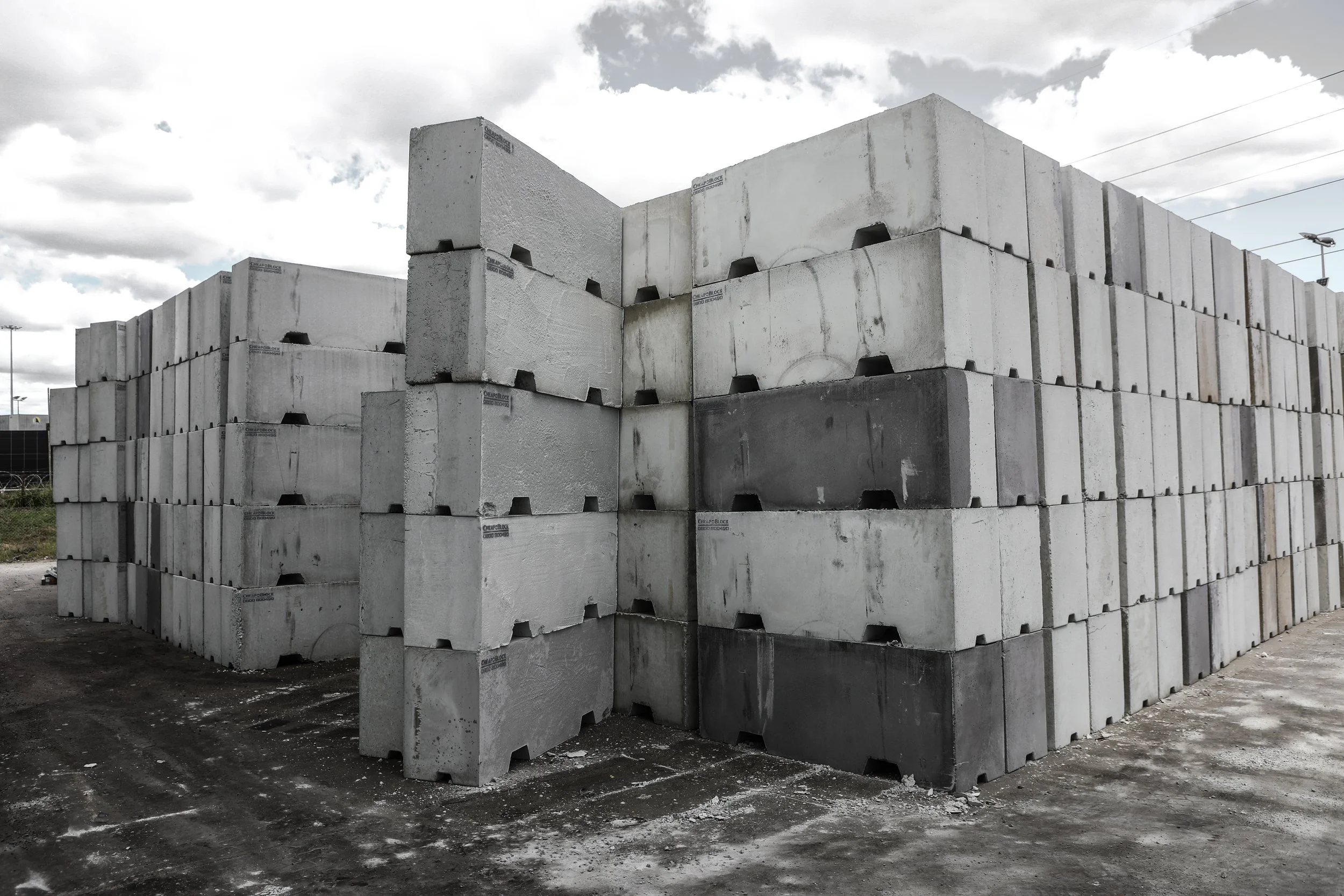
Ward Blocks
Concrete recieved via cement trucks for disposal is redirected to our Ward Blocks yard to be poured into our moulds and turned into a reusable product. We sell these as cheap as possible to optimise recycling. We sold 7,576 recycled concrete blocks last fiscal year equating to roughly 9,000 tones of concrete reused. Being a fairly new buisness we predict we will be able to improve on this number for the current fiscal year.
Rubbish Recycling
Ward has our own rubbish processing facility in Onehunga that sorts demolition and construction waste, diverting materials to landfill by separating materials like metal and wood that can be recycled. We are rapidly growing this operation by seeking new and innovative ways to reuse materials.
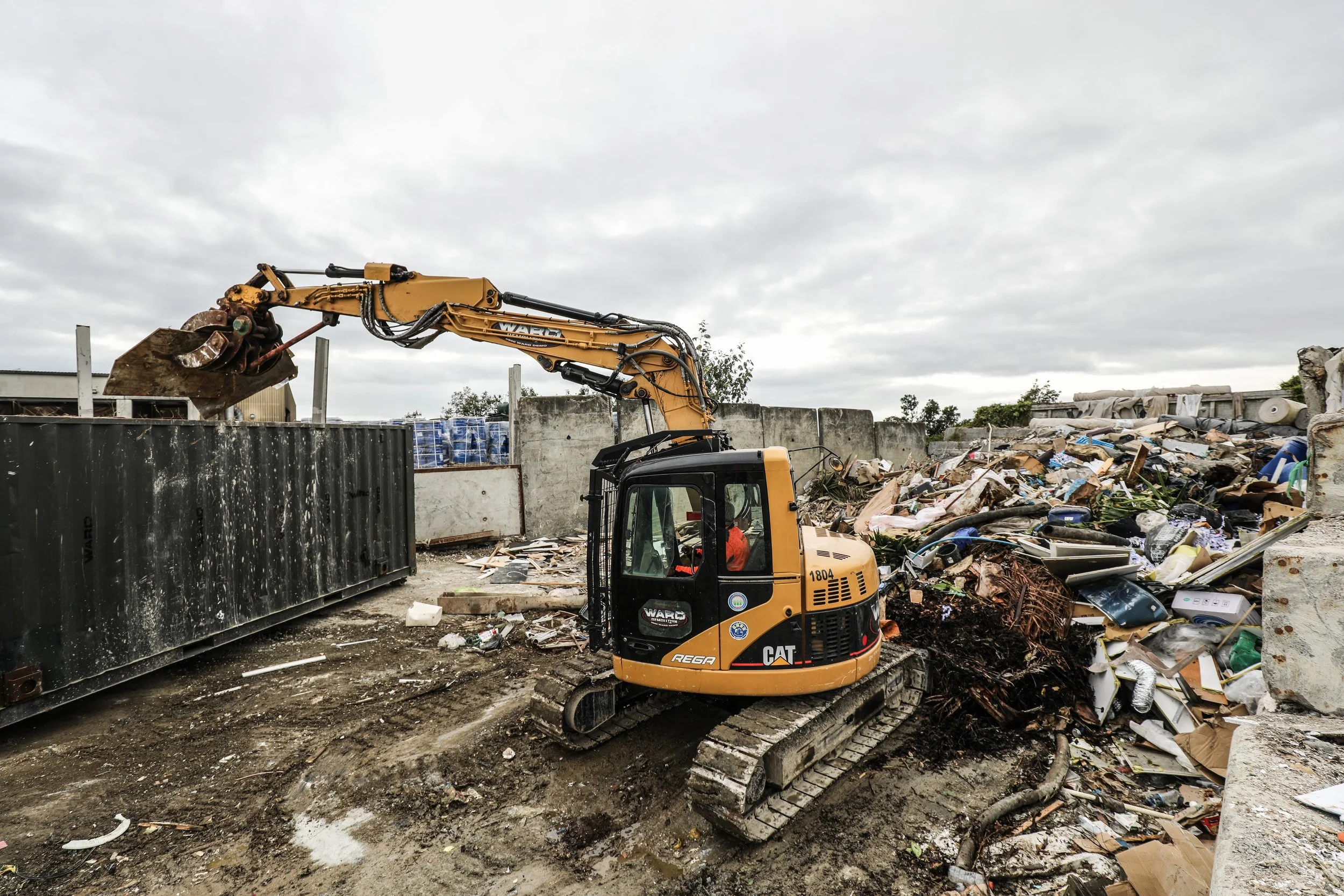
Rubbish sorting pile in 2022
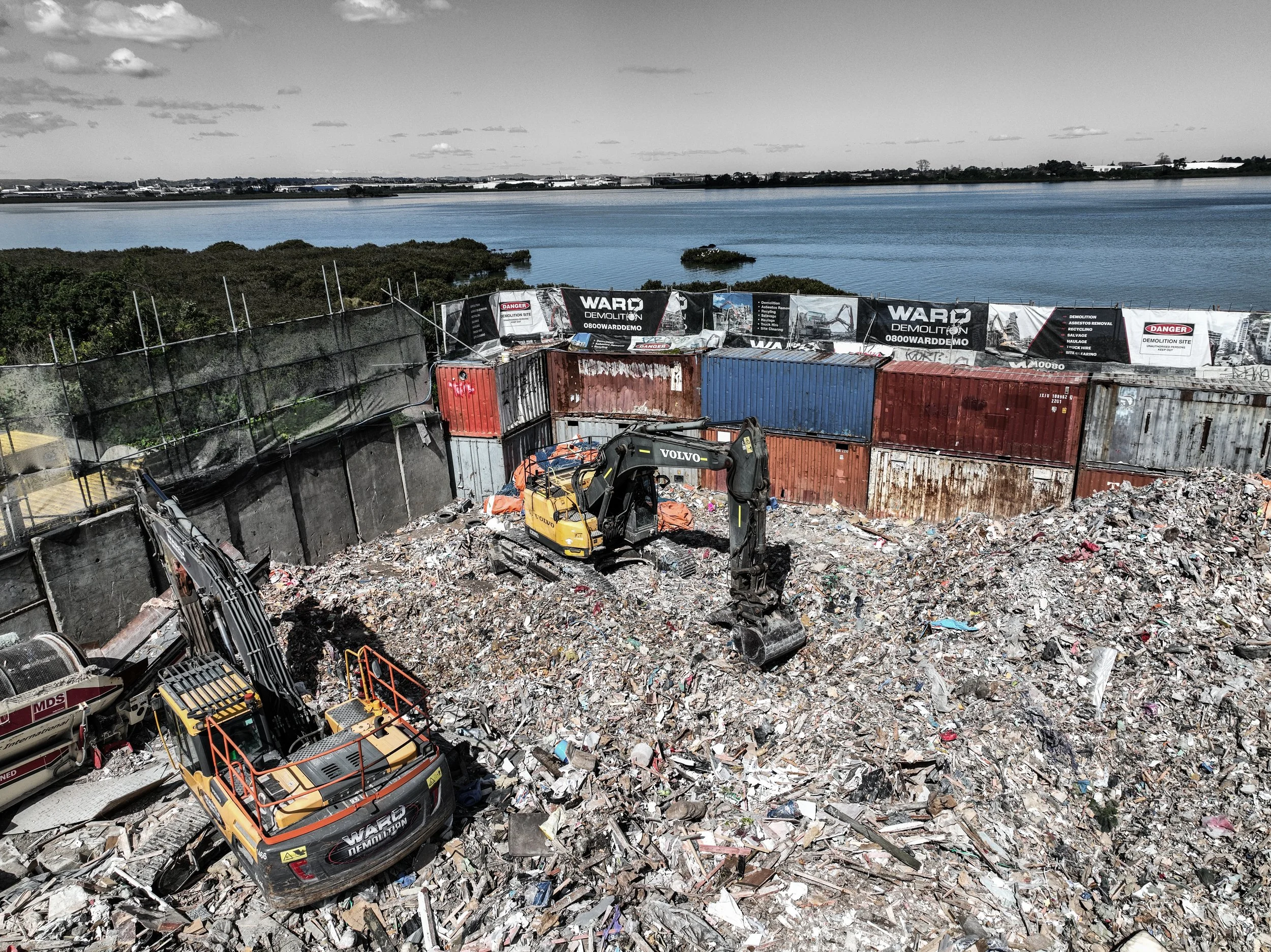
Rubbish sorting pile in 2026
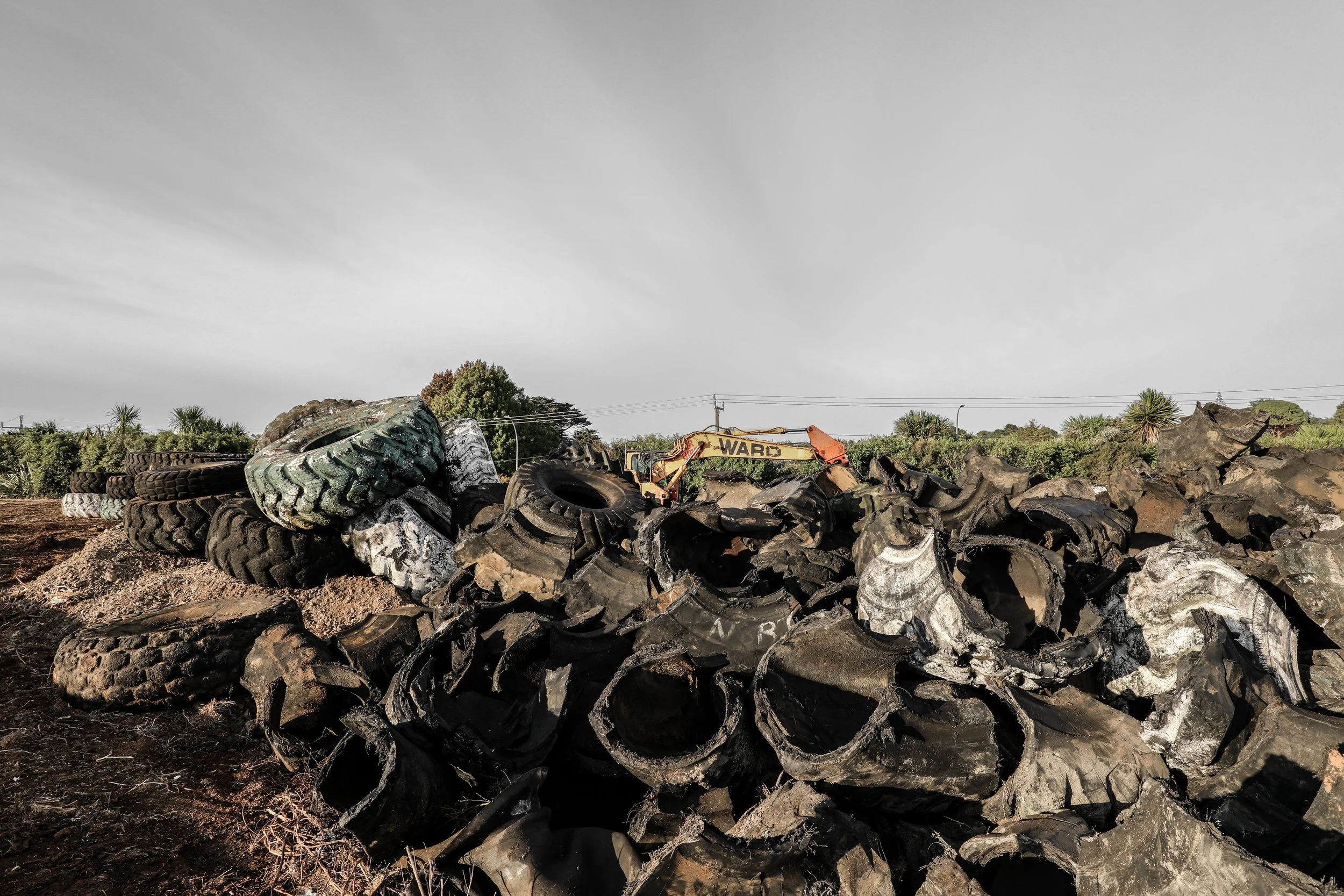
Our rubbish recycling efforts are job site dependant. We adapt to each project and assess how best we can reduce waste on a case by case. A great example of this is the Pukekohe Park Raceway project where we found a place that reuses tyres as fuel, minimising the use of coal. 100% of these tyres were recycled. Which is quite extraordinary if you consider they had already been recycled from used vehicle tyres into crash barriers. Meaning they served three purposes across their decades long lifespan. More on Rubbish Recycling HERE.



Donation
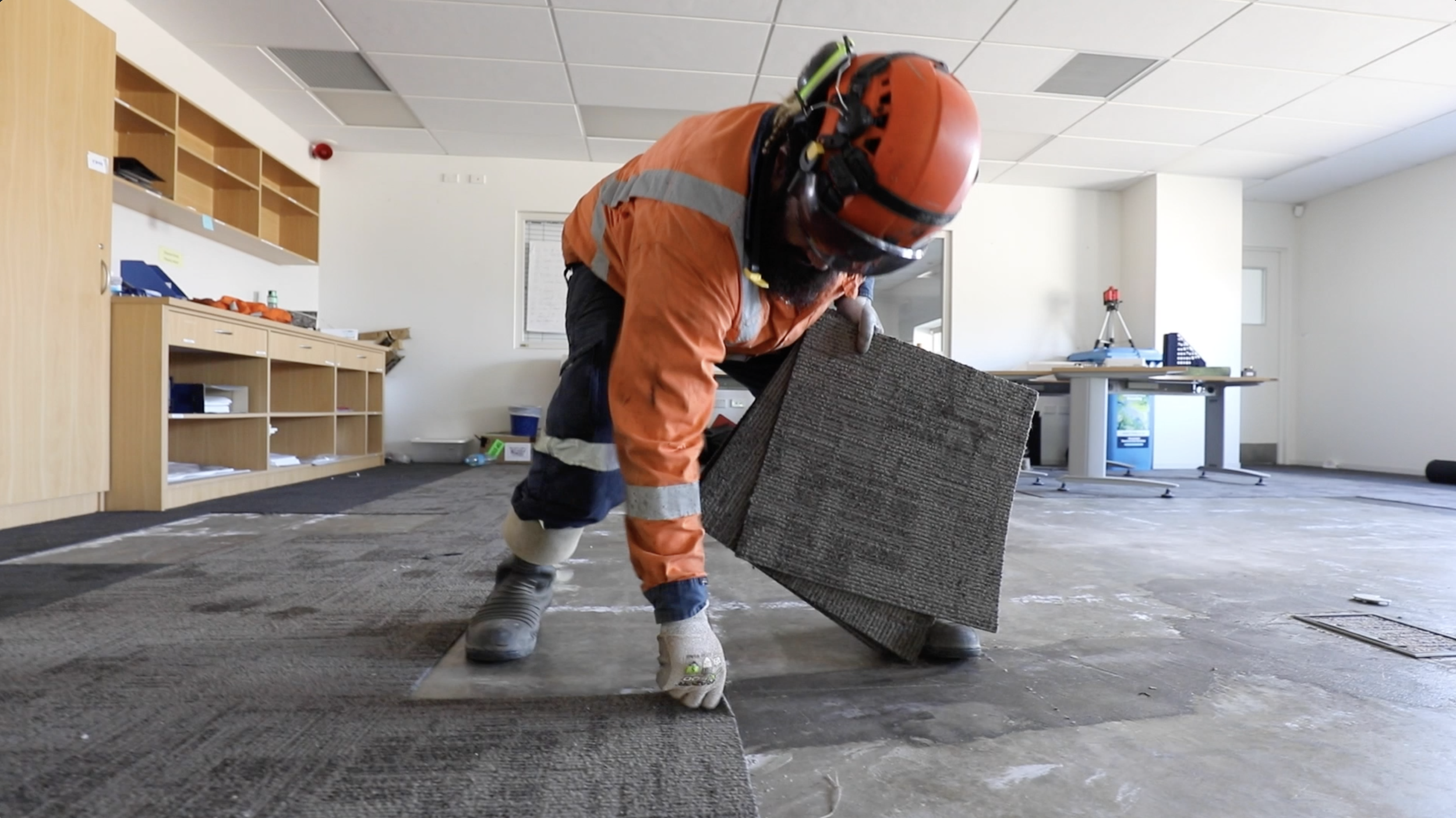
Another way we like to reduce material to landfill is by giving items away which otherwise would not be worth salvaging and can not be recycled. This is also done on a case by case basis. One example is our Southdown Power Station Project, all of the office furniture was donated to local charities (eg women’s refuge). This was something we pushed for from the start of the project as there was many large desks, chairs, cabinets etc that would not sell for enough to justify transporting them to our Salvage yard. If we didn’t donate them many of the materials would have ended up in landfill. By donating them we both helped people in need and reduced waste. We also donated all the carpet tiles to our local church.
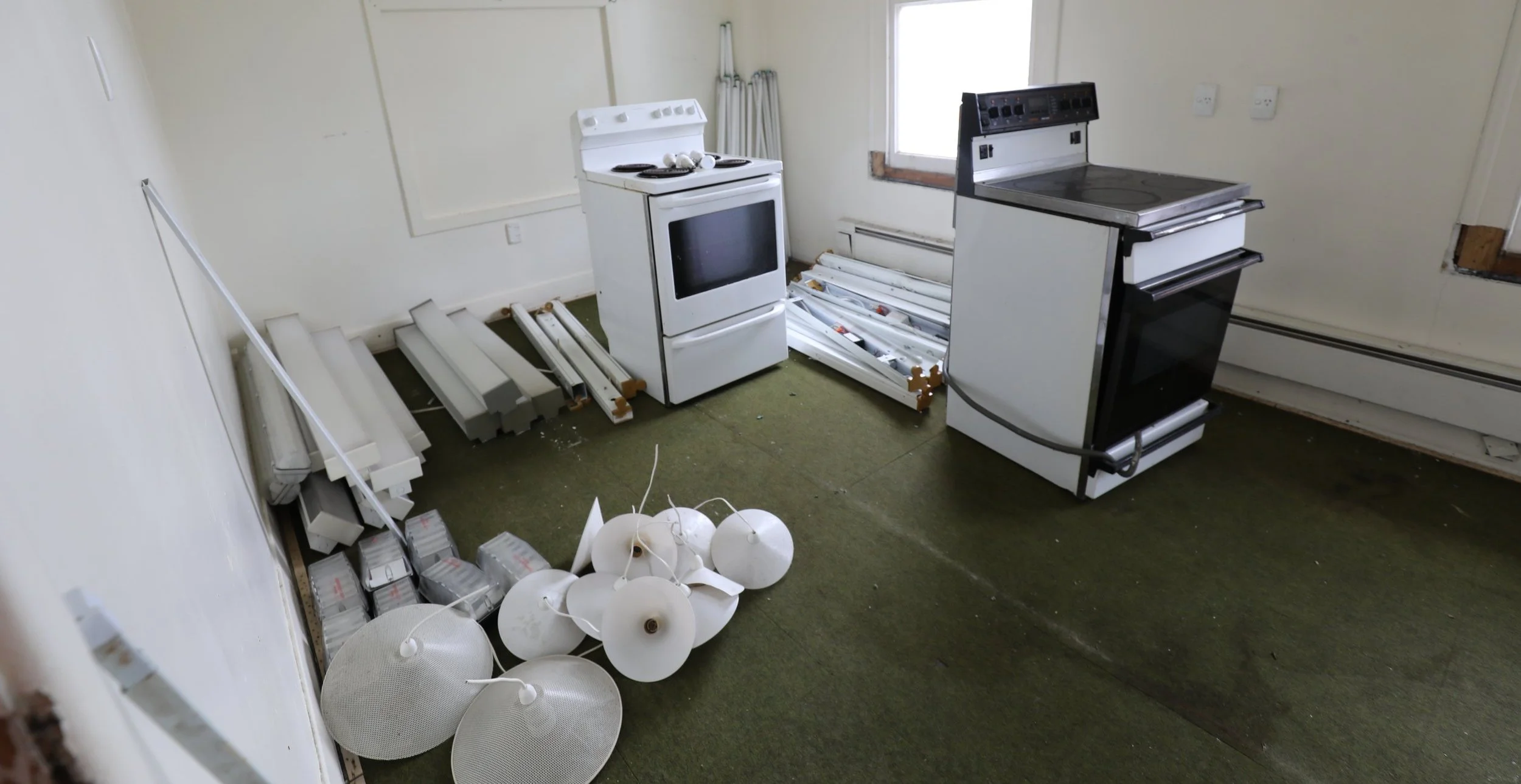
We support our staff by allowing them free salvage materials upon request for use on their own homes. This includes kitchens, windows, appliances etc. This means for reduced waste while supporting and giving back to our hard working team.
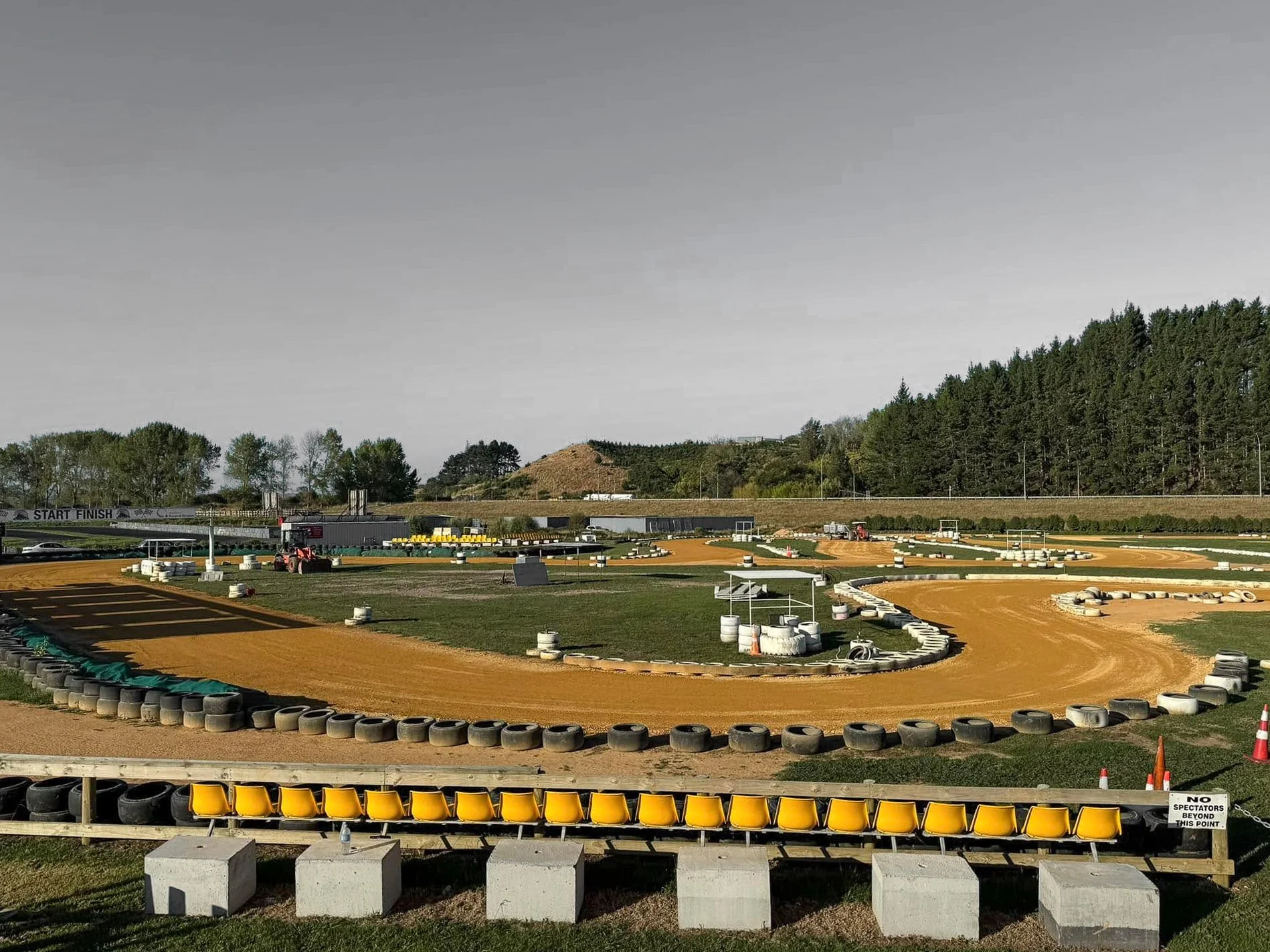
Another great example is Alexandra Parks Epsom Grandstand, the yellow plastic chairs were gifted to Franklin Dirt Kart club for spectator seating. Alongside poles and beams salvaged from other projects, to create their pit area shade. We allowed the club free hire of a 20T excavator for 6 months to build their racetrack. We are proud to support this club comprised of passionate volunteers. The Ward family are motorsport enthusiasts and dirt karting is among the cheapest form of racing, allowing those less fortunate to enjoy the typically expensive sport.


Deconstruction
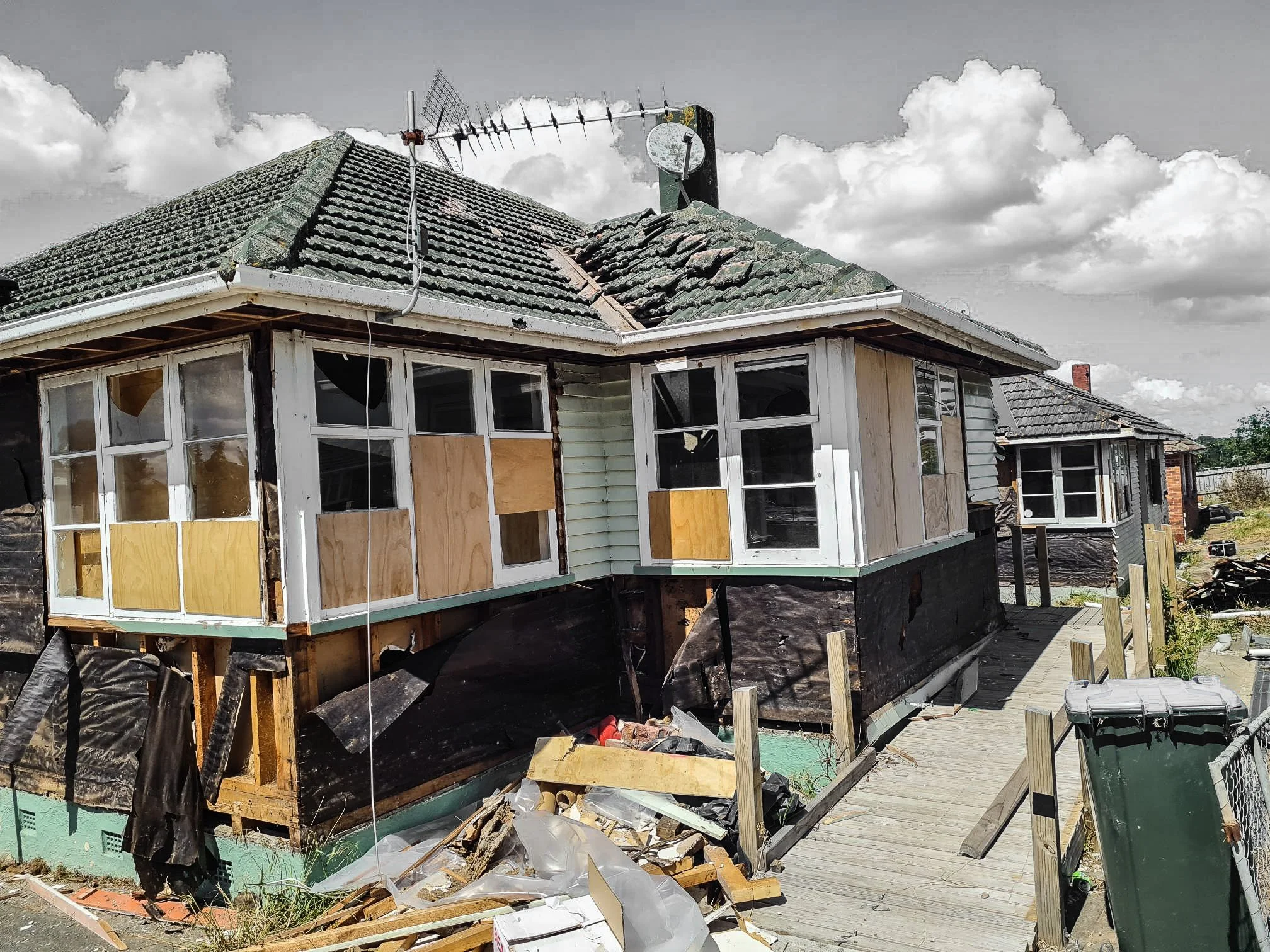
Ward aim to reuse over recycle whenever possible. This can be tricky with jobs on tight deadlines or tight budgets, as it takes a lot of extra time and labour costs to gently remove things. If it is something you are passionate about for your project we would be happy to discuss cost and timeframe with you to find something that works for both of us. As part of our standard practices we salvage items easy to remove and sell. We are seeing more and more clients that are just as passionate about the environment as we are and have completed some really cool deconstruction projects. See pictured Heatherbank Street side project where we removed the native timber cladding on multiple houses set for demolition, this practice is quite common as there is a sufficient demand for reuse of native timber. Note this was one of many stockpiles and doesn’t show the entirety of the material that was salvaged as it was loaded out as the team worked.

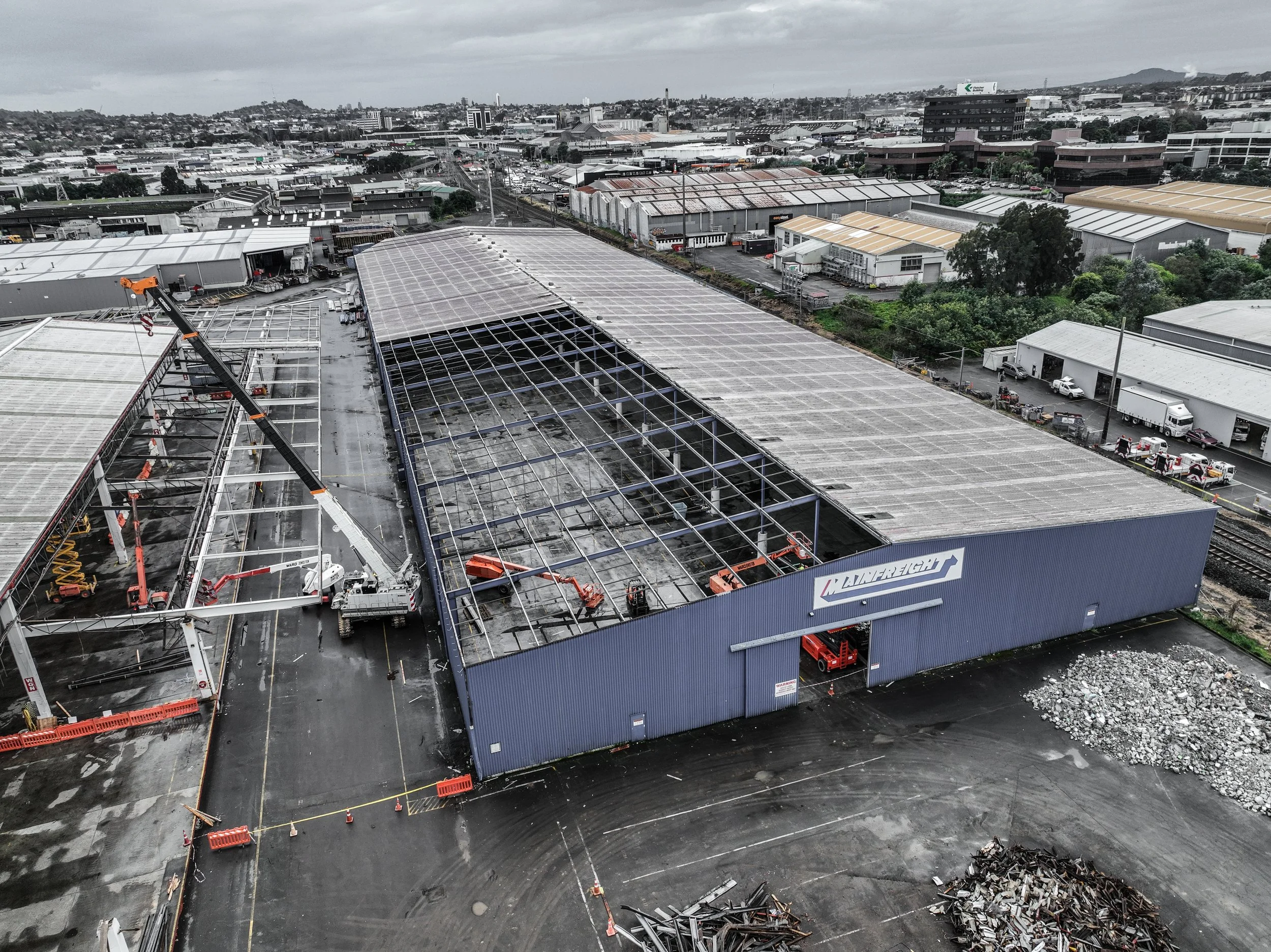
In 2024 our team completed a mind blowing deconstruction of an entire hectare of shed. Half of which was sold immediately for reuse, the other half we will reuse ourselves in our expansion of our recycling facilities. This was a massive undertaking by our team to meticulous unscrew every sheet panel and unbolt every column/ beam. This took weeks that we fortunately had due to other operations happening simultaneously onsite.
Salvage
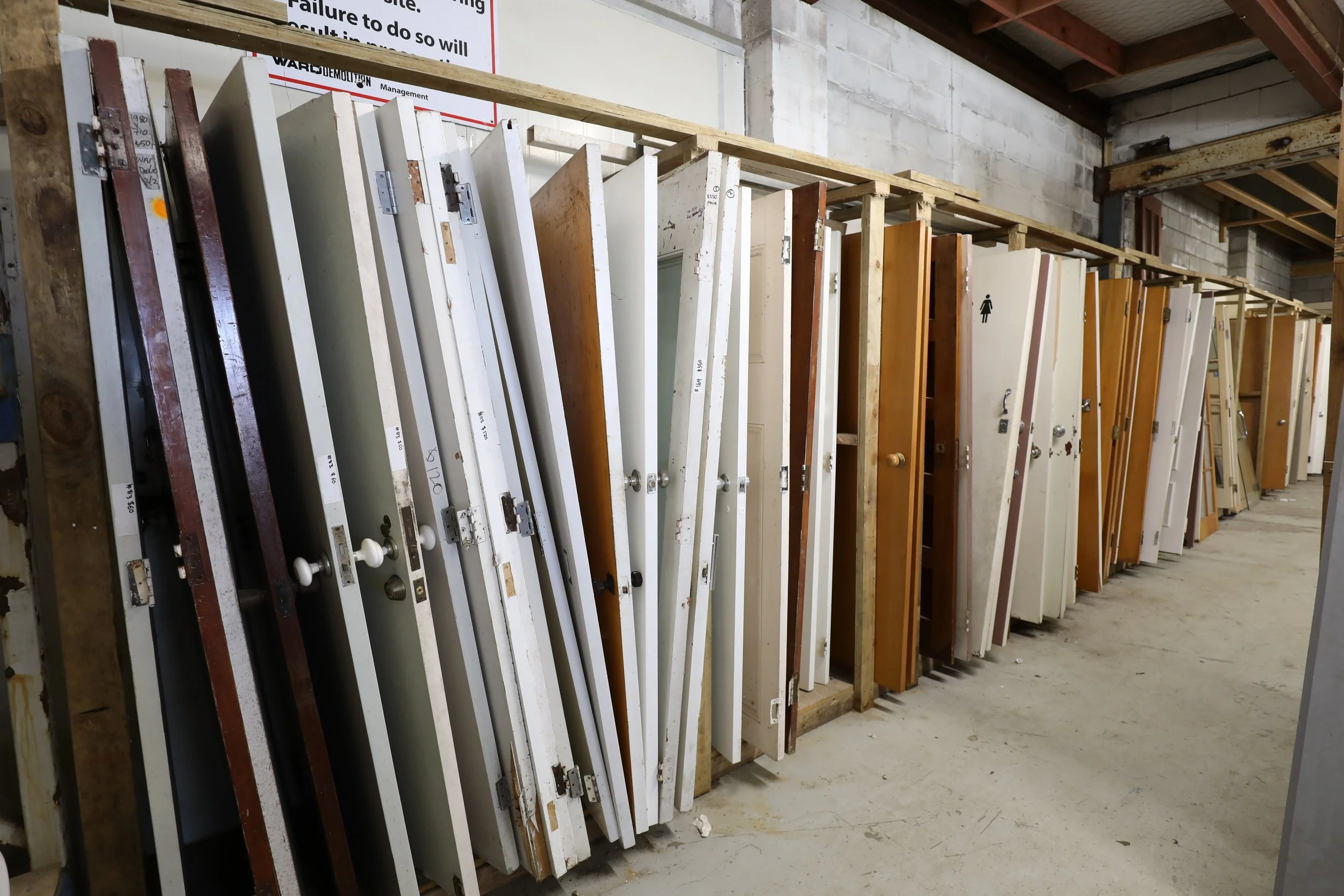
Our Salvage yards (Onehunga and Meremere) boast a wide range of materials removed from structures to be sold for re use. Our Onehunga yard allows customers to browse our range of joinery, sinks, appliances, doors etc. Meremere stores larger items (poles, beams, brick pallets, barriers, etc) for online sales only. This allows another avenue to facilitate the diversion of materials from landfill. Many items are sold for a fraction of the price you would buy it new. This allows for increased movement of items, enabling us to salvage more materials. See more info on Salvage HERE.